
Cart 0
HIGH TEMPERATURE REFRACTORY CEMENT IN KAMPALA, UGANDA
How to Source High-Temperature Refractory Cement for Industrial Plants in Kampala, Uganda
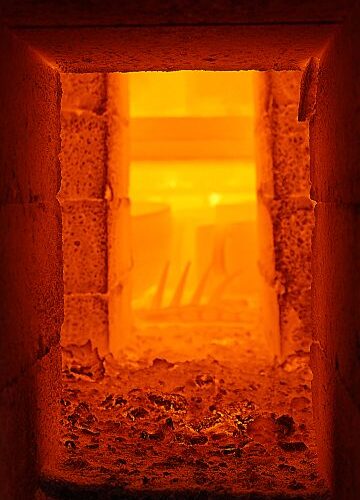
Across Uganda’s growing manufacturing belt—from steel rolling mills in Jinja and Namanve Industrial Park to bagasse-fired sugar boilers in Kakira and Lugazi, cement kilns in Tororo, and hospital incinerators in Kampala—unexpected furnace or boiler lining failure brings production to a costly halt. Standard Portland cement begins breaking down as soon as temperatures climb past 300C, leading to spalling, structural cracking, and dangerous heat escape.
To maintain continuous operations, Ugandan plant engineers, kiln builders, and procurement officers rely on specialized high-temperature refractory cements, castables, and mortars rated between 1000C and 1750C.
Because local stock in Kampala can be limited or inconsistent in alumina ratings, many Ugandan factories source directly from Insulation World Kenya Limited in Nairobi’s Industrial Area. While our sole physical store and warehouse are located in Nairobi, Kenya (we do not operate a physical branch in Kampala), we organize transport for our Ugandan customers by connecting you directly with reliable Nairobi–Kampala cross-border transporters at your cost via the Malaba or Busia highway corridors.
Understanding the 5 Refractory Grades Available for Uganda Projects
Choosing the wrong refractory grade is one of the most common causes of premature lining wear. Different sections of a boiler, kiln, or furnace experience different heat levels, mechanical abrasion, and chemical slag exposure. At our Nairobi warehouse, we stock five distinct grades in heavy-duty 25 kg moisture-resistant bags:
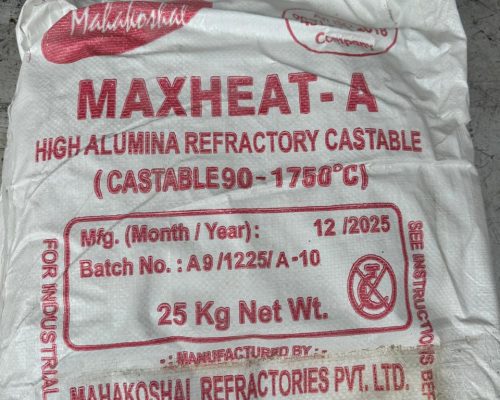
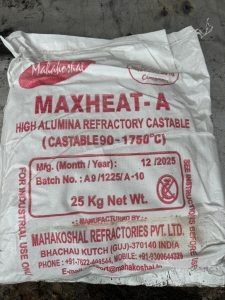
1. Maxheat A Castable (1750C | 90% Alumina | Rough Dense Castable | 25 kg) When operating temperatures push past 1600C—such as in steel induction furnaces, electric arc furnace roofs, and high-velocity burner throats—standard refractories soften. Maxheat A is formulated with 90% Alumina (Al2O3) to withstand extreme temperatures up to 1750C, aggressive molten slag, and heavy thermal shock. See full technical details on our Maxheat A 1750C Product Page.
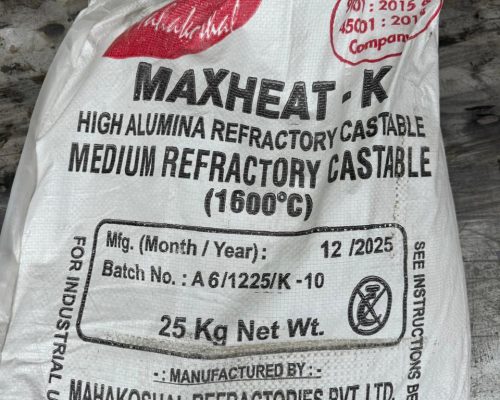
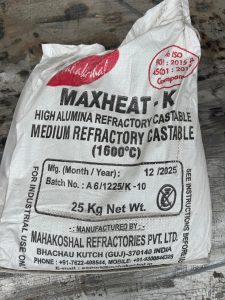
2. Maxheat K Castable (1600C | 60% Alumina | Rough Dense Castable | 25 kg) For heavy-duty industrial steam boilers, rotary lime kilns, foundry crucibles, and medical waste incinerators, Maxheat K is the industry standard. Containing 60% Alumina and rated up to 1600C, its rough coarse-aggregate structure resists flame erosion from solid fuels like bagasse, coffee husks, firewood, and coal. Explore specifications on our Maxheat K 1600C Product Page.
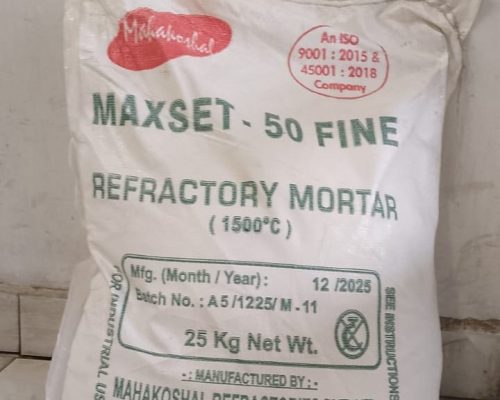
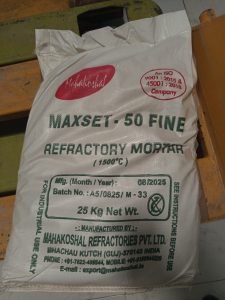
3. Refractory Mortar Maxset 50 (1500C | Fine Grade | Smooth Mortar | 25 kg) Many site contractors mistakenly try to lay firebricks using rough castable cement, which creates thick, weak joints. Maxset 50 is a smooth, fine-ground air-setting refractory mortar rated up to 1500C, engineered specifically for buttering thin, gas-tight joints between dense alumina firebricks and insulating bricks.Explore specifications on our Refractory Mortar Cement – 1500°C, 25kg | Maxset 50 Fine Smooth Cement
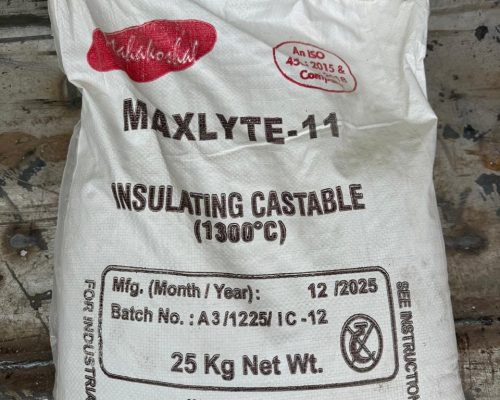
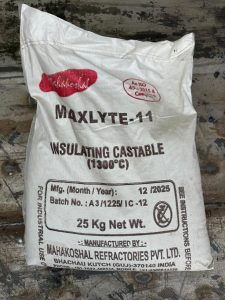
4. Insulating Castable Maxlyte 11 (1300C | Vermiculite Mix | Rough Castable | 25 kg) Trapping heat inside a kiln or oven cuts fuel consumption dramatically and protects outer steel shells from warping. Maxlyte 11 is a lightweight rough insulating castable blended with vermiculite, rated up to 1300C, designed to be poured as a thermal backup layer behind dense hot-face bricks or castables. Explore specifications on our Maxlyte Insulating Refractory Cement – 1300°C, 25kg
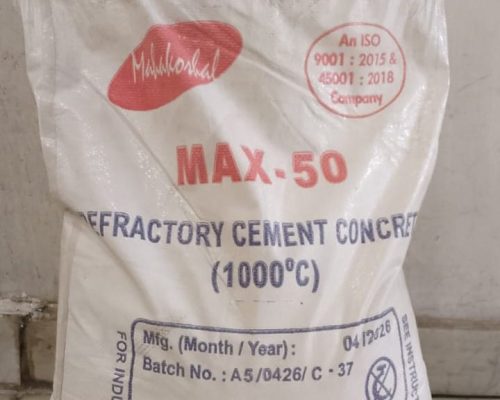
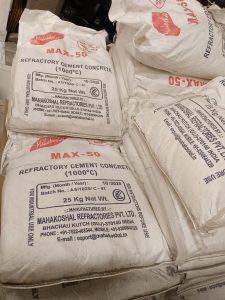
5. Fondu Cement Brand Max50 (1000C | Calcium Aluminate | Smooth Cement | 25 kg) When a factory needs rapid turnaround—such as pouring heat-resistant foundry floors, boiler plinths, chemical effluent drains, or commercial bakery hearths—Fondu Cement delivers high load-bearing strength within 24 hours and withstands temperatures up to 1000C. Read more on our Fondu Cement in Kenya Page.
Critical On-Site Mixing Rules Every Contractor Must Follow
Even the highest-alumina refractory cement will fail early if mixed improperly on site. Share these three non-negotiable rules with your installation crew:
- Never Mix Ordinary Building Sand With Rough Castables: Factory pre-blended castables like Maxheat A (1750C) and Maxheat K (1600C) contain exact, laboratory-graded alumina aggregates. Never mix them with ordinary building sand, ballast, or Portland cement. Adding external sand introduces silica and lime impurities that destroy the 1600C–1750C heat rating and cause rapid melting or cracking. Mix strictly with clean potable water.
- Know Which Products Can Blend With Vermiculite: While rough dense castables are mixed neat with water, smooth Fondu cement and Maxset refractory mortar can be blended cleanly with vermiculite when lightweight thermal insulation is needed.
- Always Mix Full 25 kg Bags: During long-distance highway transit from Nairobi to Uganda, fine hydraulic cement powders settle slightly differently from coarse aggregates inside the bag. Mixing complete 25 kg bags at once guarantees uniform strength across your entire lining.
Consolidating Complete Furnace Lining Materials in One Shipment
When Ugandan maintenance teams plan an annual boiler or kiln shutdown, ordering single items separately increases freight costs. From our Nairobi Industrial Area warehouse (Hema House Godown No. 8, Old Enterprise Road), procurement officers can consolidate 25 kg bags of refractory castable cement and mortar alongside:
40% to 70% Alumina Dense Firebricks (for direct flame zones)
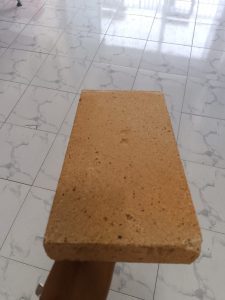
- 40% Alumina Standard Fire Bricks – 1600°C
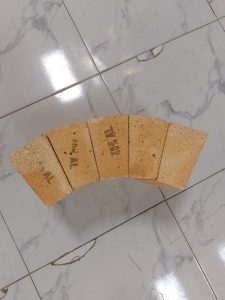
- 40% Alumina End Arch Fire Bricks – 1600°C
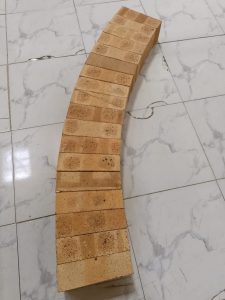
- 40% Alumina Side Arch Fire Bricks – 1600°C
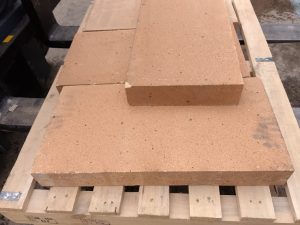
- 40% Alumina Fire Splits – 1600°C
- 40% Alumina Fire Slabs – 1600°C
- 70% Alumina High Alumina Fire Bricks – 1810°C
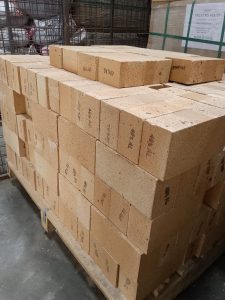
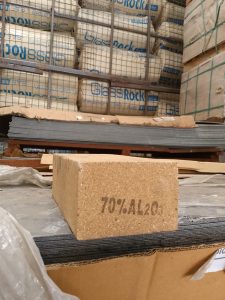
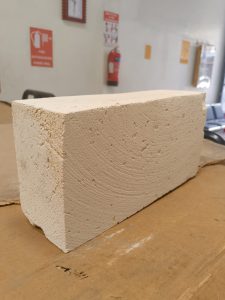
Insulating Firebricks (for low-thermal-conductivity backup walls)
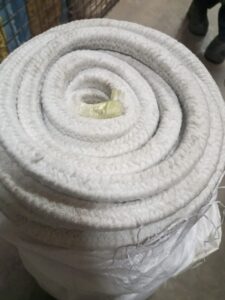
Insulating Bricks in Nairobi Kenya
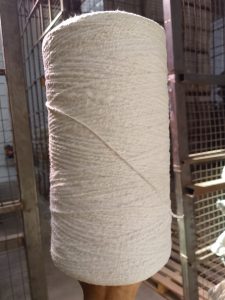
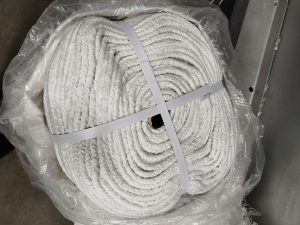
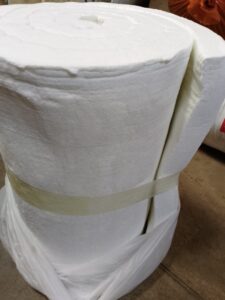
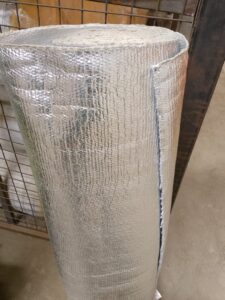
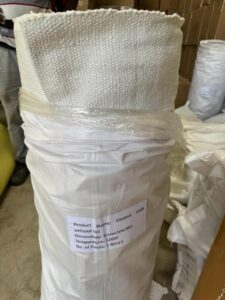

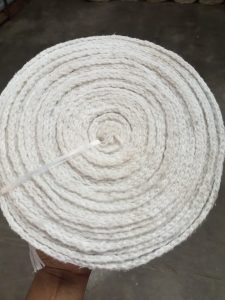
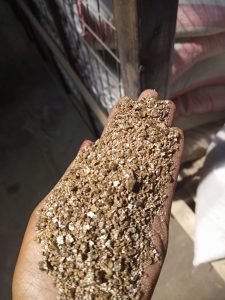
Exfoliated Vermiculite (for loose-fill or insulating concrete mixes)
Vermiculite Insulation in Kenya | Medium & Large Grade 10kg Bags
How Ordering & Cross-Border Transport From Nairobi to Uganda Works
We do not list fixed prices online because project quotes depend on bag quantities and order volume. Here is how Ugandan factories and contractors order from us:
- Share Your Specs or Measurements: Send your required product grade, bag count, or furnace lining dimensions via WhatsApp (+254 722 401 175) or email info@insulationworldkenya.co.ke / insulationworldkenya@gmail.com.
- Receive an Itemized Proforma Quote: Our Nairobi desk prepares a fast, accurate proforma invoice for your materials.
- Cross-Border Transport Coordination: Once confirmed, we organize transport for customers by connecting you directly with reliable Nairobi–Kampala transporters at your cost (or you may assign your own clearing agent or company truck) to load directly from Hema House Godown No. 8, Old Enterprise Road, Industrial Area, Nairobi for smooth transit.
Frequently Asked Questions (FAQs)
1. Do you have a physical shop or warehouse in Kampala, Uganda?
No. Our physical store and warehouse are located exclusively in Nairobi, Kenya (Industrial Area, Old Enterprise Road). However, we regularly supply factories and contractors in Kampala, Jinja, Mukono, and across Uganda, and we organize transport for customers by connecting you directly with reliable cross-border transporters at your cost.
2. Can we mix Maxheat K or Maxheat A castable cement with ordinary building sand?
No. Rough dense castables like Maxheat A and Maxheat K are factory pre-blended. Adding ordinary building sand destroys their heat resistance and causes premature structural failure. Always mix with clean potable water only.
3. How do I calculate how many 25 kg bags of refractory castable cement my furnace needs?
Measure the Length (m) x Width (m) x Thickness (m) of the lining section to find your total volume in cubic meters, then multiply by the material’s bulk density. Send your dimensions to our Nairobi desk on WhatsApp (+254 722 401 175) and we will calculate your exact bag count.
4. Which refractory product is best for laying firebricks in a boiler or kiln?
Always use a smooth, fine-grade refractory mortar such as Maxset 50 (1500C, 25 kg bag) for laying firebricks. Never use rough castable cements (Maxheat K or Maxheat A) for brick joints because their coarse aggregates prevent thin, tight bonding.
5. Can Fondu cement or Maxset mortar be mixed with vermiculite?
Yes. Smooth Fondu cement (1000C) and Maxset mortar (1500C) can be blended with vermiculite where lightweight thermal insulation is needed.
6. Why must a newly cast refractory lining be heated slowly on first firing?
Freshly cured refractory concrete holds trapped water inside its pores. Heating a new lining too quickly turns trapped moisture into pressurized steam, causing explosive cracking (steam spalling). Always hold the furnace at 150C–200C first until all steam clears before ramping up to full operating heat.
7. Are prices published on your website? No. We do not publish fixed online prices because quotes depend on order volume and project specifications.
8. How can Ugandan procurement officers request a quote?
Call or WhatsApp our Nairobi sales desk at +254 722 401 175 or email insulationworldkenya@gmail.com / info@insulationworldkenya.co.ke.
9. Which Other Refractory materials and Insulation materials does Insulation World Kenya Supply?
Insulation World Kenya Limited supplies wide range of Insulation and refractory materials such as:
Armaflex Rolls | Plain and With Foil Adhesive
Rockwool Pipes | 25mm and 50mm Wall Thickness
40% Alumina Standard Fire Bricks
40% Alumina End Arch Fire Bricks
40% Alumina Side Arch Fire Bricks – 1600°C ,
70% Alumina High Alumina Fire Bricks
Superlite 5000 Non-Metallic Gasket
Superlite 5000 Metallic Gasket Sheets
Superlite Acid Resistant Gasket Sheets
Superlite Special Oil Resistant Gasket
Speak With Our Nairobi Refractory Supply Desk
Planning a boiler overhaul, kiln relining, or foundry repair in Uganda? Contact Insulation World Kenya Limited today for technical grade selection, itemized proforma quotes, and cross-border transport coordination:
Store & Warehouse Address: Nairobi, Kenya — Industrial Area, Along Old Enterprise Road, Inside Mash Auto, Hema House, Godown No. 8
Phone / WhatsApp: +254 722 401 175
Email: insulationworldkenya@gmail.com | info@insulationworldkenya.co.ke
Facebook: Insulation World Kenya Limited
Youtube: Insulation World Kenya Limited
Instagram: Insulation World Kenya Limited